Outi Lassila’s master’s thesis examines urban construction that promotes biodiversity

Jimi Liikkanen
University of Oulu Wuorio Award finalist, architect Outi Lassila, explores habitats for non-human species within the built environment in her thesis. The work reflects on how our tendency to understand nature as subordinate to humans influences planning.
Accelerating urbanisation is paving the way for a new set of challenges that urban designers and city planners need to address in their daily work. The ecological crisis and the related loss of biodiversity require new ambitions and methods in the planning of the built environment. What has worked in the past may not resolve the ever-changing challenges posed by our rapidly evolving environment, either today or in the future.
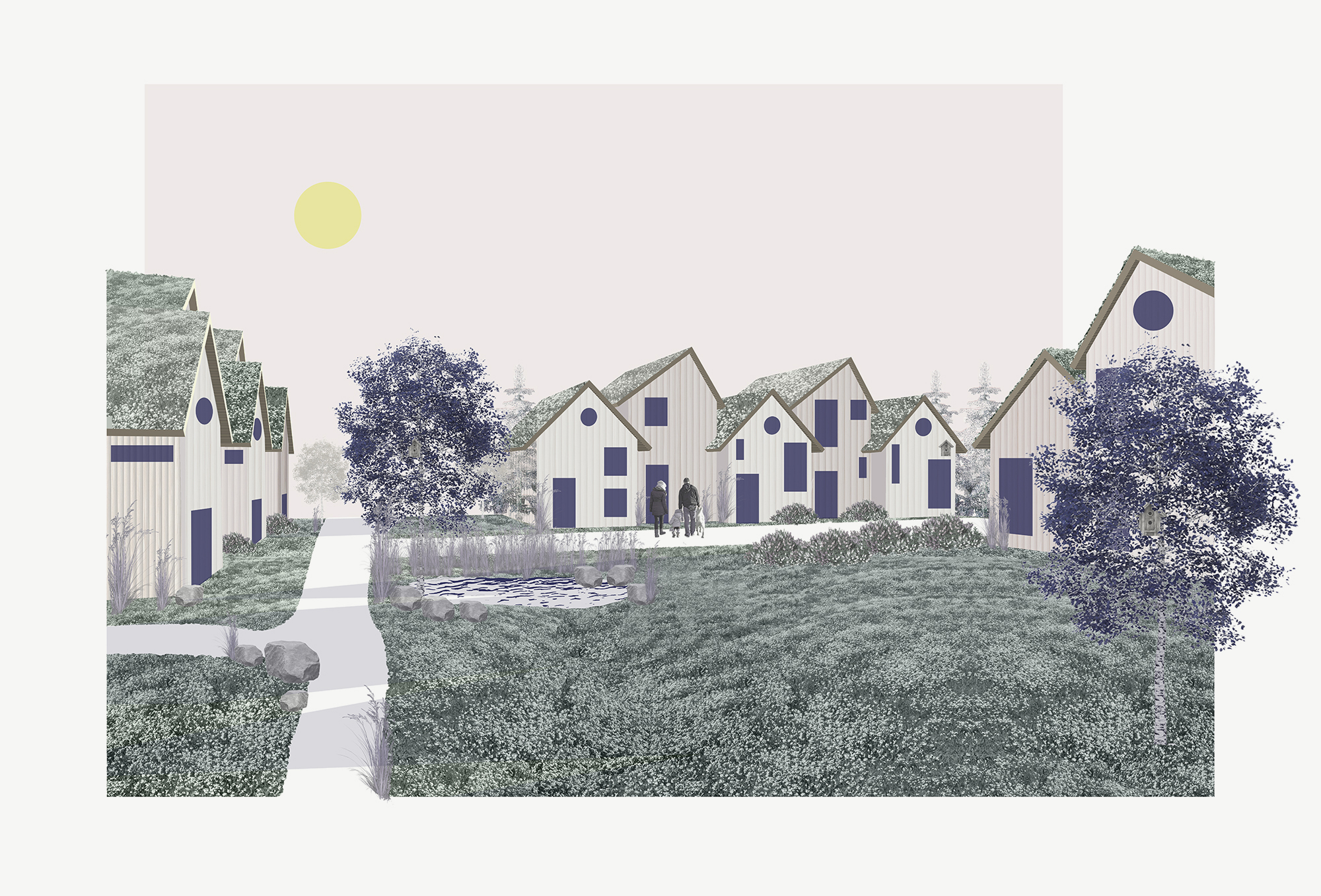
In my diploma thesis, Mixed Blocks of Urban Life and Nature: supporting biodiversity in the built environment, I explore posthumanism as a theoretical point of approach in solving the complex challenges our cities are facing. Through a literature review, the thesis examines the living environments of the non-human. The subject is accessed by exploring how to create desirable conditions for the non-human in the built environment. The results are visualised and concretised by developing concepts for imaginary urban blocks.
Who speaks for the non-human?
The concept of the non-human is used to describe all species and forms other than humans, and in the context of this work, it includes animal species and other living environments. By utilising the term non-human, the work seeks to broaden the space for all living beings and destabilise the human-centred perspective. A more familiar word could be multispecies planning, but in the context of this work, it is important to consider the tension between the human and the environment to which non-human refers.
Advocacy planning has been a relatively marginalised theory in the Finnish urban planning tradition. In this thesis, it is considered in a new context as a tool for advocating for the non-human in order to achieve a more equal playing field. In a nutshell, the theory seeks to highlight the need for an advocate in the urban planning process to benefit those who cannot take part in the process. The theory, combined with the inevitable fact that the non-human cannot represent itself, opens up an interesting debate about who should or could advocate for it. Are we missing an advocate for non-human and environmental views in modern planning, or should this advocacy be an integral part of every designer’s palette?
City block as a starting point
My master’s thesis is research-based and consists of two parts. In the first part, a literature review examines how cities should be developed from the perspective of the non-human to create more diverse urban environments. As a conclusion, I note that ecologically sustainable urban planning requires multispecies approaches. Additionally, considering biodiversity in the built environment requires knowledge of local nature and environments, research-based planning and interdisciplinary collaboration. Furthermore, practical principles for ensuring both the quality and quantity of living environments for the non-human should be explored.
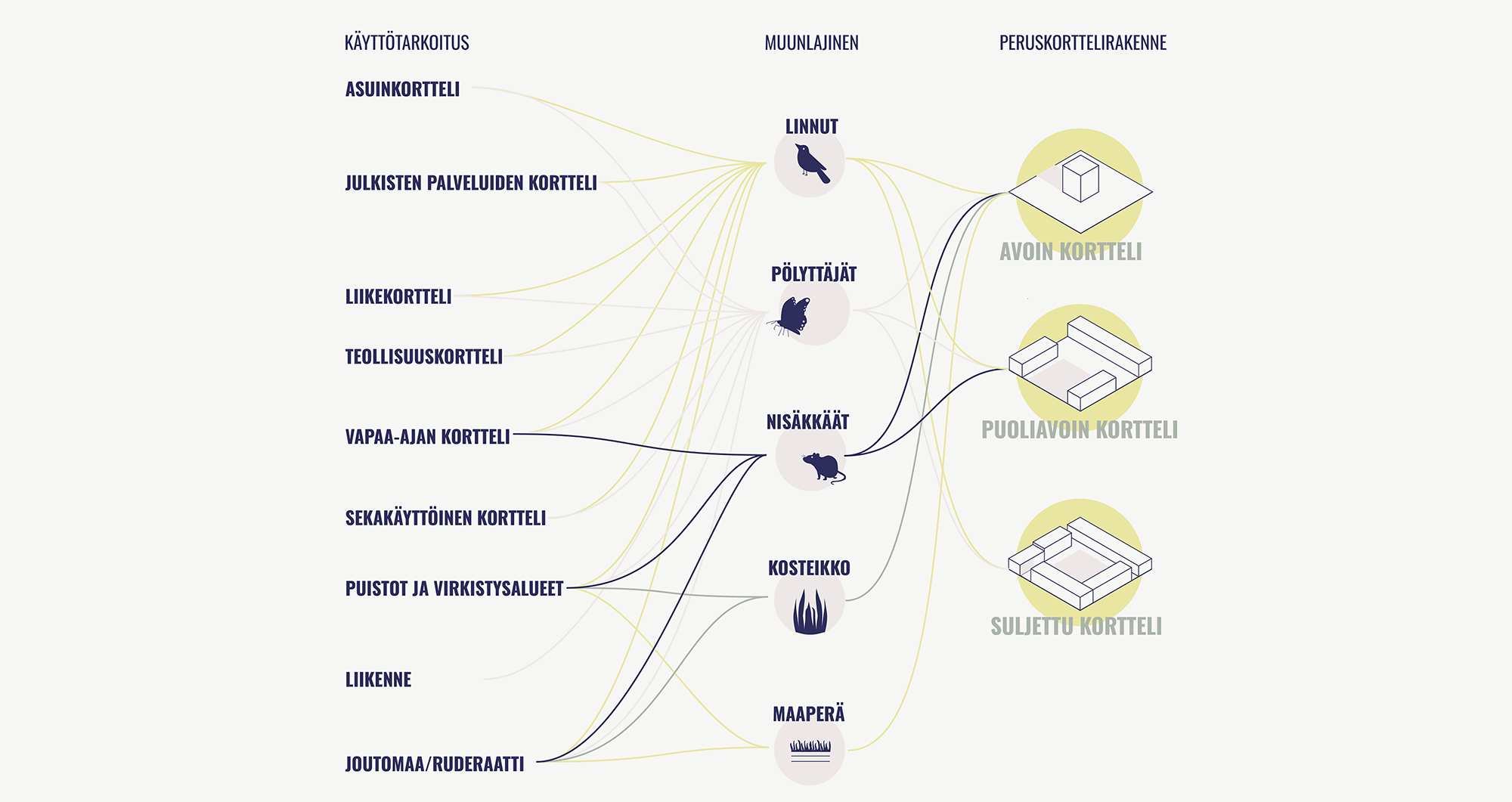
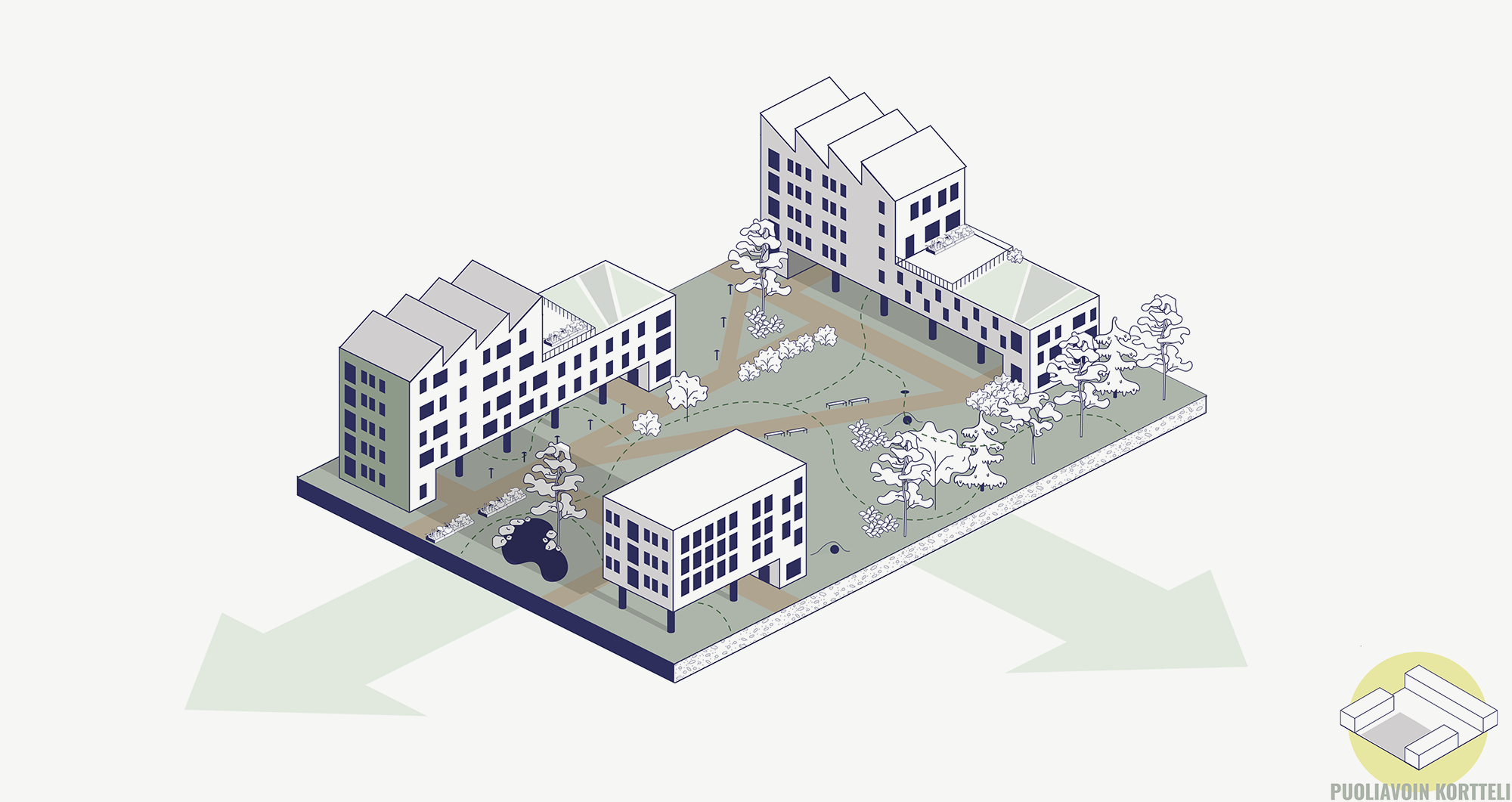
In the second part of the thesis, based on the findings of the literature review, a design approach for the non-human is explored by utilising the so-called non-human personas tool. With this approach, the needs and the challenges, among other information, of the living conditions can be explored. By developing a broader method for designing the non-human city block, shared living environments for humans and non-humans are designed to highlight what kinds of environments this method can produce. The city block, as a basic unit of urban structure, offers an interesting perspective on the topic through the lens of architecture. This block-based approach enables exploration of the environment in three dimensions and offers a fresh angle on examining ecological connectivity.
Beyond human-centredness, towards softer borders
The thesis sheds light on how the human-nature juxtaposition, nature being secondary, affects all of our design practices. Perspectives supporting the needs of nature have to be fully justified in favour of humans, as are, for example, ecosystem services; if they aren’t, it can be difficult to convince of their importance. Living environments for non-humans are seen as secondary, and this contributes to the emergence of wicked problems in the urbanising world.
For me, the purpose of the thesis is to generate discussion rather than aiming for bulletproof solutions. Reaching the goal of seeing non-humans not in contradiction with humans but rather as equal actors is possible, but it requires a broader shift in the relationship between humans and nature. It should be further examined how we create relationships between the natural and the built environment: do we allow them to be mixed, and are we brave enough to blur the lines between them? It is up to us to consider our role and responsibility as architects in the era of the ecological crisis and how ready we are to adapt our working methods to be able to take on this challenge.
Outi Lassila graduated as an architect from the University of Oulu in 2025. Her master’s thesis, Mixed Blocks of Urban Life and Nature: supporting biodiversity in the built environment, received an honorable mention for the Wuorio Award in 2026. The main supervisor of the thesis was lecturer Anssi Joutsiniemi.
Read award juror Eve Sarapää’s evaluation of the awarded works at this link.


