Screenful of concrete

The History of Concrete / Helsinki International Film Festival
The Helsinki International Film Festival, Love & Anarchy, has cemented its place amongst the autumn’s film events in Finland. Every year, the festival also screens films with architectural themes. We put together a selection of highlights from the festival’s programme for all film lovers with an interest in architecture.
This autumn’s programme goes deeper than the surface, featuring, among other things, an acclaimed documentary about the history of concrete, a Japanese drama exploring the tensions between city and countryside, and a socially critical British film set among the concrete suburbs of Birmingham.
Filmmaker John Wilson, known for HBO's popular documentary series How To with John Wilson, pours his comic storytelling into a new mould in his feature debut The History of Concrete, which puts the world's most widely used building material in the lead role. The director's playful curiosity about the everyday material takes viewers from Rome's Pantheon to Ohio's oldest concrete-paved street and from beneath the underpasses of Los Angeles to a Kim Kardashian party. The result concretises into a beautiful, collage-like portrait of our strange contemporary world and the environment we inhabit.
The cement-grey tones continue in I See Buildings Fall Like Lightning, set in Birmingham. The film follows five childhood friends from the same suburb whose lives have taken very different paths: one buys a lavish designer flat in London, another starts a construction company, while a third gets high on heroin. The film follows in the tradition of British cinema's critical examination of class society and reminds us how place and circumstances shape a person’s life.

Circumstances also play a role in the Swedish Cold War drama Redoubt, in which a farmer stubbornly sets about building an underground bunker to protect himself against nuclear war. The strength of this delicate black-and-white film lies in its ability to be – like concrete itself – both rough and poetic at the same time.
The festival programme also features other films that resonate with architectural themes. In the Japanese drama Nagi Notes, concrete changes to wood as architect Yuri leaves her busy life in Taiwan to travel to the Japanese countryside and visit her sculptor sister-in-law, Yoriko. Yoriko wants to carve her latest wooden sculpture in Yuri's likeness. The slow, hands-on process forces both women to pause and confront their hidden feelings. Secrets and plot twists gradually reveal themselves, like the grain of wood emerging as it is being sanded.

A historical architectural dimension is provided by Glorious Summer, set in a beautiful yet dystopian world where three women have inexplicably become prisoners of a Renaissance palace. Shot on 16mm film, summer days unfold around the crumbling palace's swimming pools and across the surrounding lush meadows, like a paradise – as long as no one makes the mistake of crossing the enclosing wall. The film subtly explores how people ritualise space and use architecture as a means of control: where does the boundary between freedom and oppression begin?
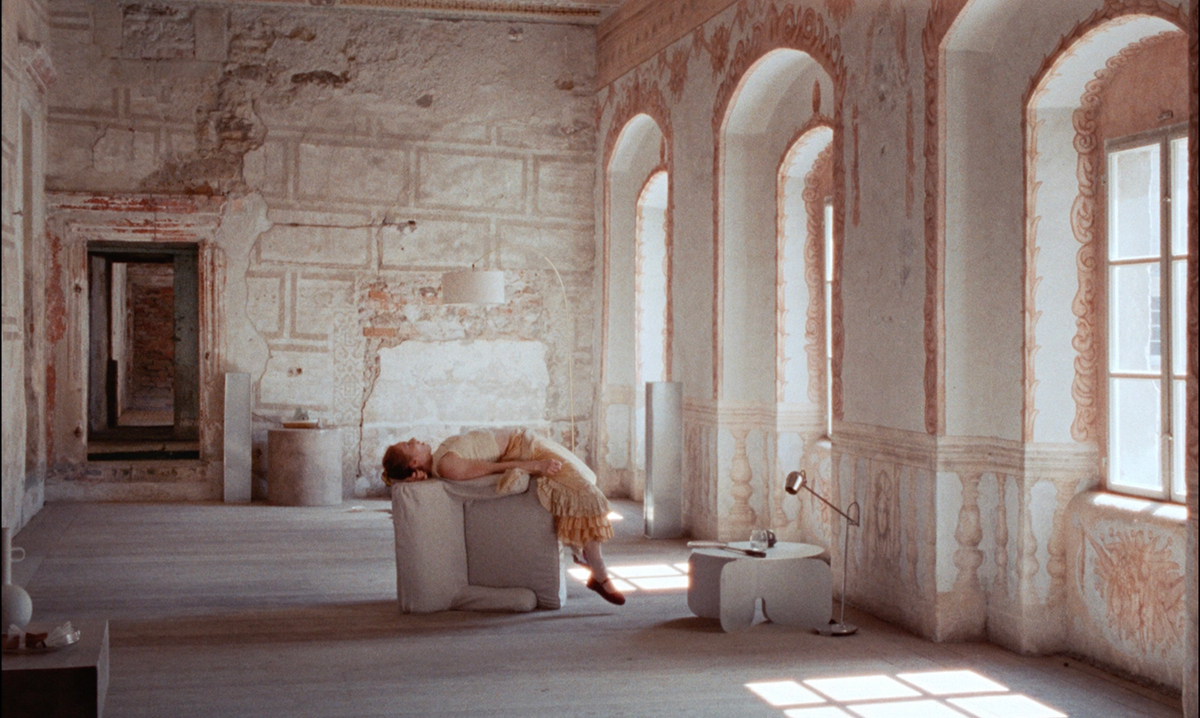
The films approach space and material from different angles, but abstract themes such as grief, fear, class divisions and power ultimately concretise into rather tangible material forms. Indeed, the framework holding these films together is found in the active role of the built environment: the sturdy walls of a bunker promise protection in an atmosphere of fear, the crumbling walls of a colourful Renaissance palace hold captive with their beauty, and a wooden sculpture forces us to pause for a moment. In the end, structures shape us just as much as we shape them.
Find the screening times for the films mentioned in this article on the Archinfo website here.
The full programme is available on the festival website at hiff.fi.
Helsinki International Film Festival – Love & Anarchy takes place for the 39th time from 17 to 27 September 2026. The festival programme features 136 feature films and 114 short films and celebrates the art of cinema and showcases bold, visually accomplished new films without prejudice. Each year, the programme also includes films exploring architecture and the built environment.


